Two weeks,
carefully kept.
The artistry is only half the work. The other half is how you treat your skin for the fourteen days that follow. Follow this guide closely and your results will look exactly the way they're meant to — natural, even, and dense.
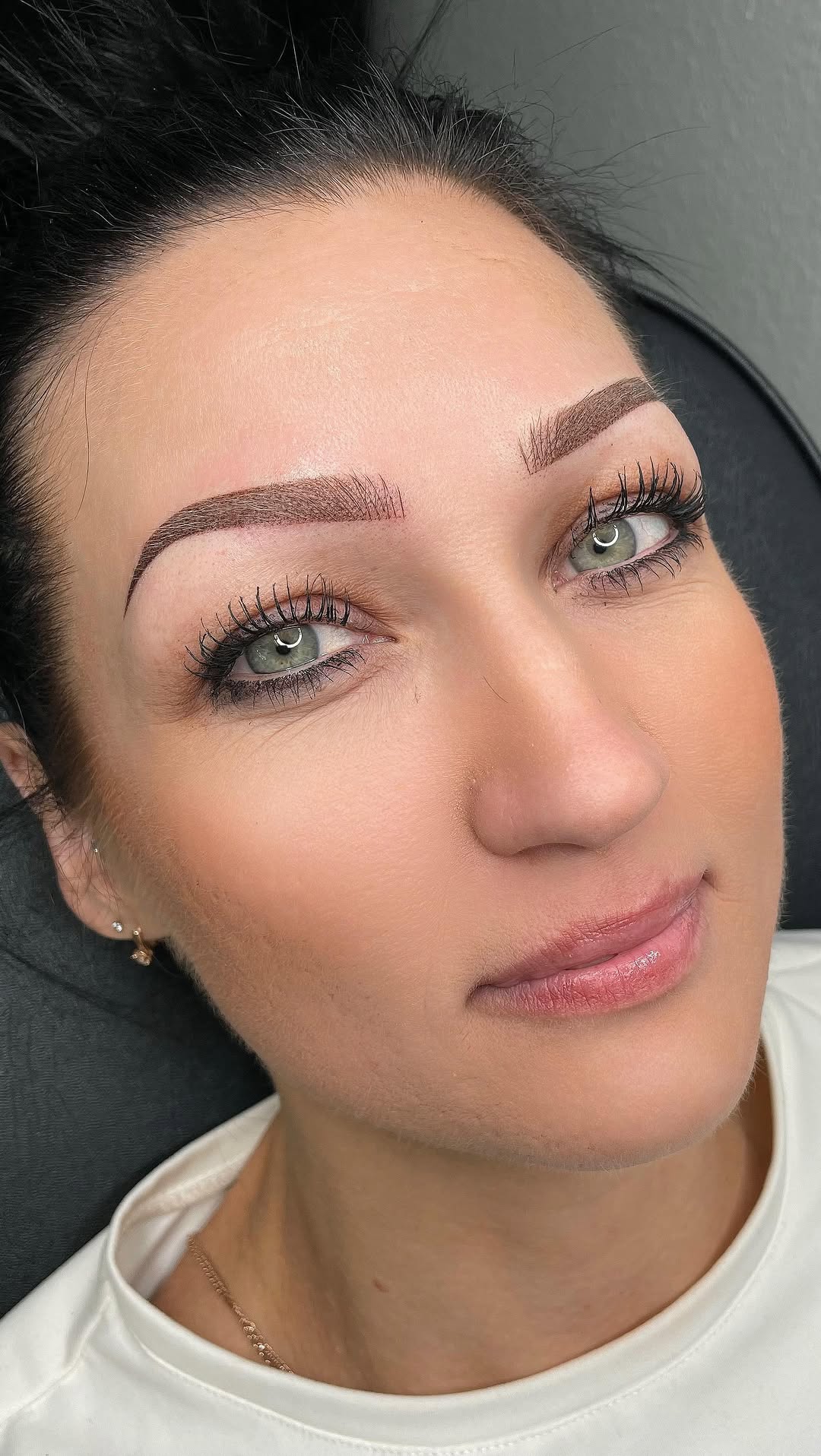
What to expect,
day by day.
Every client heals slightly differently, but the general shape of healing is consistent. If anything looks far outside these windows — redness spreading, pain increasing after day three, fever — text the studio immediately.
- Day 0–1
Keep the area completely dry.
For the first 24 hours, no water on the treated area — full stop. Lymph and pigment will weep; gently blot every hour with a clean, dry paper towel. This prevents the pigment from oxidizing into a scab that's too thick.
- Day 2–7
Clean gently, ointment thinly, twice a day.
Morning and evening: dampen a cotton round with sterile water or the gentle cleanser we provide. Lightly pat — never rub. Air-dry for one minute, then apply a rice-grain amount of ointment in a thin layer. Your brows should look lightly moisturized, not greasy.
- Day 7–10
Expect flaking. Do not pick.
Fine scabs will lift naturally between days seven and ten. The area may look patchy or uneven during this window — this is normal. Picking removes pigment with it. If something itches, press lightly (do not scratch).
- Day 10–14
Color appears to vanish. Then it returns.
After the scabs have fully released, your brows may look 50 to 60 percent lighter than you expect. This is known as the ghosting phase — the pigment has retreated into deeper skin layers as the surface heals. Color will re-emerge over the next 2 to 4 weeks as the skin settles.
- Week 3–6
Color stabilizes into its final tone.
The pigment reads more naturally as the skin fully heals beneath. What you see at week six is approximately what you'll live with until your touch-up refines it.
- Week 6–8
Perfecting session.
The second appointment is where we even color, refine shape, and add density where pigment didn't retain. This session takes 1 to 1.5 hours and completes the look.
The short list of yes.
- Use the ointment we provide — a thin rice-grain layer, twice daily.
- Sleep on your back for the first week.
- Drink plenty of water — hydrated skin retains pigment better.
- Keep your hair pulled back during the day for the first 48 hours.
- Apply SPF 30+ daily from week three onward to prevent fading.
- Text the studio with any questions — no question too small.
The short list of no.
- Swimming, hot tubs, saunas, and steam rooms
- Intense exercise or any heavy sweating
- Direct sun exposure and tanning beds
- Picking, scratching, or peeling any scabs
- Makeup on or near the treated area
- Retinol, glycolic acid, AHAs, BHAs near the brows
- Face-down sleeping
- Petroleum products (Vaseline, Neosporin)
- Fragranced skincare or active serums on the area
After healing — five habits that make it last.
Daily SPF. UV is the number one cause of premature fading. A light layer of SPF 30+ over your brows every morning adds months to your results.
Skip retinol in the area. Retinol, retinoids, and acid exfoliants accelerate cell turnover — including the pigmented cells. Apply them everywhere except the treated area.
Avoid chemical peels on the face. Any professional peel will lighten your permanent makeup. Tell your esthetician about the work before any procedure.
Moisturize gently. A well-hydrated skin barrier retains pigment better. Any fragrance-free moisturizer works; we're happy to recommend.
Schedule your annual refresh. A short maintenance touch-up every 12 to 24 months keeps color saturated and shape crisp. Booking ahead means you catch the fade before it catches you.
Still healing, and something feels off?
Redness spreading, fever, pain past day three, or unusual discharge — text us. Post-procedure questions are never a bother, and quick action keeps small issues small.